|
|
 |
|
|
|
Good morning and happy Friday,
Europe is in the grips of a record-setting heatwave, and France suffered a major power outage; ironically, “an event dedicated to discussing the impacts of extreme heat at the London School of Economics was cancelled” due to heat. Here in the U.S., the central plains and midwest were pummeled by severe storms this week, with more rough weather on the way.
The U.S.-Iran MOU has made it through its first week intact, though not without strains; analysis by the Dallas Fed finds the U.S. economy is much less vulnerable to geopolitical price shocks than it was in the past. Axios notes that “if a disruption to Middle East oil supply equivalent to what occurred this year had taken place in 1980, it would have caused U.S. GDP growth to decline by 5.6 percentage points”—enough to trigger a severe recession—”but in 2026, it reduced growth only by 0.3 percentage point, a barely noticeable blip.”
The drop in oil prices has yet to flow through to gasoline pumps and many Republicans are worrying about high gas prices ahead of the midterms; President Trump has ordered the DOJ to investigate gas price ‘gouging’ by oil companies, posting on Truth Social that “The big Oil Companies are not dropping their price at the pump commensurate with the sharply lower prices they are paying for Oil.” However, due to the "rockets and feathers" dynamic, “retail fuel costs shoot up when oil prices do, but can decline slowly even when crude falls sharply.”
In other news, the global solar fleet surpassed 3 TW in early 2026, but the market may be headed for its first contraction in more than two decades as China's installations slow. Despite a record 664 GW added in 2025, annual growth has decelerated sharply—from 85% in 2023 and 32% in 2024 to just 12% last year.
And, the U.S. Energy Storage Monitor Q2 2026 report, published by Wood Mackenzie and ACP, finds that the U.S. energy storage market broke records in Q1 2026, deploying 3.3 GW / 8.4 GWh across all segments, marking growth of 54% in MW and 41% in MWh compared to Q1 2025; WoodMac forecasts that installations will quadruple by 2031.
Read on for more.
|
|
|
 |
|
|
$121 Billion Market Distortion
A new NERA Economic Consulting study commissioned by the Corporate Energy Buyers Association (CEBA) finds that restricting utility-scale wind and solar development could increase U.S. electricity and natural gas costs by $121.2 billion between 2027 and 2033. As electricity demand surges from data centers, AI, and advanced manufacturing, the analysis concludes that limiting renewable deployment would distort least-cost resource selection, increase reliance on natural gas, and elevate wholesale power prices across major U.S. markets. Here are some fast facts:
-
Power price impacts are broad-based, with average U.S. electricity prices rising 6.1% under constrained renewable scenarios. Regional effects are most acute in competitive markets, where ERCOT experiences up to a 22.2% increase in electricity costs—about $21 billion cumulatively—while NYISO and Western regions see double-digit price pressure.
-
Notably, a “dangerous secondary effect” of restricting renewables is likely to be “a severe supply chain squeeze for thermal generation”—the analysis finds that limiting solar and wind deployment would force the construction of 32-38 GW of additional natural gas capacity, increasing dependence as gas turbine procurement costs have already reportedly risen 36% above planning assumptions.
-
Under technology-neutral market conditions, NERA projects deployment of 135-143 GW of solar and up to 297 GW of onshore wind based on cost competitiveness. This resource mix would reduce natural gas's share of peak-hour generation from 43% to 27%, lowering exposure to fuel price volatility while supporting grid reliability.
⚡️ The Takeaway
Constraints vs. competition. For clean energy developers, the study provides a strong economic case for technology-neutral permitting and streamlined project approvals. The report underscores how permitting constraints don’t eliminate demand—they reallocate it into more expensive and supply-constrained thermal pathways, thereby distorting market efficiency. The findings position wind and solar as critical tools for managing load growth, controlling costs, and reducing dependence on constrained natural gas infrastructure.
|
|
|
 |
|
|
Level Playing Field?
Speaking of constraints, Canary Media reports that lawmakers in the Buckeye State are advancing legislation that could further disadvantage utility-scale renewables. The move is notable because it comes less than a year after Ohio enacted HB 15, which was seen as a technology-neutral effort to increase generation and let the market determine which resources get built. In contrast, SB 294—based on draft legislation promoted by the American Legislative Exchange Council (ALEC) and passed by the Ohio Senate on a party-line vote—would establish new “reliability” standards that critics say favor natural gas and nuclear generation while creating additional hurdles for wind and solar projects. Here’s what you need to know:
-
The bill would require projects reviewed by the Ohio Power Siting Board to meet a minimum 50% site-combined capacity factor. Many observers view the proposal as favoring dispatchable resources while creating new challenges for wind and solar development.
-
While storage can increase the capacity factor of renewable projects, it remains unclear how regulators would apply the standard in practice. The proposal could prove particularly challenging for wind facilities.
-
A key criticism is that capacity factor measures energy output, not reliability. PJM already uses an effective load-carrying capability (ELCC) methodology that accounts for how much a resource contributes to system reliability and capacity needs, arguably making a separate capacity-factor requirement redundant.
-
Opponents, including clean energy trade associations, renewable energy advocates, and business groups, argue the legislation will discourage investment in some of the fastest-growing and lowest-cost sources of new generation at a time when PJM has emphasized the need for new generation across the resource mix.
⚡️ The Takeaway
Moving the goalposts. The bill now moves to the Ohio House, where lawmakers are expected to consider it after the summer recess. Beyond the 50% threshold itself, developers will be watching how the proposal could influence permitting decisions. If enacted, SB 294 could create a significant new hurdle for renewable projects in a state that already has one of the country’s more restrictive siting environments for utility-scale wind and solar.
|
|
|
 |
|
|
|
|
|
|
 |
|
|
|
|
 |
|
|
SPARC Ignites Fusion’s Next Chapter
Fusion energy continues to make headlines—and one giant, donut-shaped machine in Massachusetts is at the center of the action.
At Commonwealth Fusion Systems’ (CFS) campus in Devens, crews are racing to complete SPARC, a compact tokamak designed to prove that fusion can generate more energy than it consumes. Think of it as a magnetic bottle for a miniature star. While more than 150 tokamaks have been built worldwide, CFS says SPARC will be the most powerful of its kind yet—and it’s already more than 75% complete.
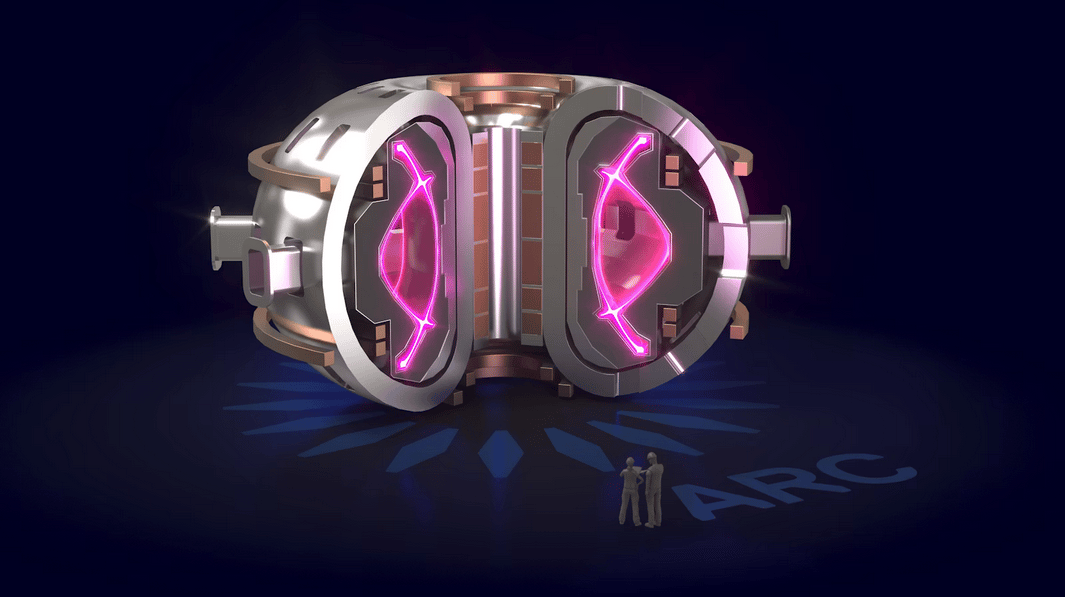
Why does that matter? Because SPARC isn’t the end goal. It’s the launchpad for ARC, CFS’s planned commercial fusion power plant in Virginia. If SPARC delivers, ARC could bring fusion-generated electricity to the grid in the early 2030s, potentially powering hundreds of thousands of homes with a tiny amount of fuel.
The latest boost comes from five new peer-reviewed studies validating key elements of ARC’s design. For an industry often criticized for being “always 30 years away,” independent scientific validation is a big deal. It suggests fusion is moving from theory and lab experiments toward real-world infrastructure.
|
|
|
 |
|
|
|
And the money flowing into the sector is impossible to ignore. Seventeen fusion startups have now raised more than $100 million each, pushing total private investment past $13 billion. The driver? AI. As data centers scramble for massive amounts of clean, reliable electricity, fusion is increasingly being viewed as a potential solution rather than a science project. CFS leads the pack with roughly $3 billion raised, making SPARC one of the most closely watched clean energy projects on the planet.
The big takeaway: fusion is no longer just a moonshot. With SPARC taking shape, ARC advancing, and billions of dollars chasing the opportunity, the industry is entering its most consequential decade yet.
|
|
|
|
|
|
Thanks for diving into the Developer Dispatch with us.
|
|
|
|
|
|
|
|
|
|
Building American power requires a powerful team. |
|
|
|
|
|
|
|
|