|
|
 |
|
|
|
Good morning and happy Friday,
It’s the second full week of competition at the Winter Olympics, with Team USA sitting third in the medal standings. It was also a crowded week culturally, as Chinese New Year, the start of Ramadan, and Mardi Gras all shared the same day on the calendar.
But Energy Secretary Chris Wright wasn’t in the mood for international kumbayas, as he renewed his pressure on the IEA to abandon net zero emissions scenario modeling, raising the prospect that the U.S. might withdraw from the organization if it doesn’t comply and prompting pushback from European leaders.
Closer to home, we’re watching an Ohio bill modeled on legislation from the American Legislative Exchange Council (ALEC) that would redefine what counts as a “reliable energy source” in a way that could effectively sideline wind and solar — and potentially other technologies as well. It appears to have some traction, but is also attracting organized opposition, making passage uncertain, particularly amid voter sensitivity to rising electricity costs.
And in a major milestone for advanced compressed air energy storage, Hydrostor has secured a 50 MW offtake agreement with California Community Power for its 4 GWh Willow Rock project, moving one of the largest CAES facilities in the U.S. closer to realization.
Read on for more.
|
|
|
 |
|
|
Limbo Lifted – Sort Of
After months of uncertainty, the U.S. Treasury Department and IRS released interim guidance (Notice 2026-15) clarifying how clean energy developers and manufacturers must comply with new “foreign entity of concern” (FEOC) restrictions under the OBBBA. The rules limit access to major tax credits — 45Y, 48E, and 45X — if projects rely on material assistance from prohibited foreign entities (PFEs), primarily tied to China. The guidance delivers meaningful clarity on supply-chain cost calculations but leaves major questions unresolved around foreign ownership and control. Here are some key points:
-
Material Assistance Cost Ratio (MACR) thresholds established: Projects must meet rising non-PFE sourcing thresholds to qualify for credits — 40% for solar, 55% for energy storage and 50% for manufacturing components in 2026, with required percentages increasing steadily through 2030.
-
Safe harbors ease supply-chain tracing: Developers can rely on existing domestic content tables and assigned cost percentages, and use supplier certifications, rather than auditing every upstream input like wafers or polysilicon.
-
Re-power and interconnection clarified: Only newly added equipment must meet FEOC thresholds in retrofit projects, and qualified interconnection property is calculated separately from the main facility.
-
Foreign control rules still unresolved: Treasury did not clarify how ownership stakes, debt holdings, board influence or IP licensing agreements trigger disqualification.
⚡️ The Takeaway
Clarity, with caveats. The guidance provides a functional pathway for projects starting in 2026 and reduces compliance burdens by leaning on familiar safe harbor tables. But unresolved foreign influence rules continue to create legal and financing uncertainty, particularly for energy storage and multinational manufacturers. Treasury has promised further regulations later this year, with comments open through March 30, 2026. Until clearer ownership standards are issued, clean energy developers can proceed — but capital markets are likely to remain cautious.
|
|
|
 |
|
|
Mind the (Storage) Gap
BESS deployment has surged nationwide, with U.S. capacity topping 40 GW in 2025 – yet growth remains concentrated in Texas and California, while Eastern markets such as PJM, MISO, and SPP lag despite mounting reliability needs and load growth. A new report finds that the disparity stems less from technology or developer appetite and more from structural barriers embedded in market rules, interconnection processes, procurement design, and planning frameworks. Here are some key findings:
-
Deployment disparity: ERCOT and CAISO dominate installations due to clearer revenue pathways and policy support, while Eastern markets struggle with accreditation uncertainty and slower regulatory processes.
-
Undervalued flexibility: Storage economics rely on stacking arbitrage, capacity, and ancillary services revenues, yet current market designs often fail to compensate for fast-ramping, sub-hourly flexibility and locational value.
-
Interconnection bottlenecks: Long queue timelines, restudies, and inconsistent modeling assumptions erode storage’s speed-to-power advantage, particularly in PJM and MISO.
⚡️ The Takeaway
Flexible technology, rigid markets. Closing the storage gap will depend on deliberate market and policy reforms that better align compensation with performance. Developers can advocate for clearer, performance-based capacity accreditation, dynamic dispatch and reserve pricing reforms, and faster, storage-specific interconnection pathways. Engaging utilities and regulators on flexible procurement structures and improved modeling practices will also be critical. As load growth accelerates and reliability pressures mount, markets that modernize first are likely to unlock the next wave of battery deployment.
|
|
|
 |
|
|
|
|
|
|
 |
|
|
|
|
 |
|
|
Rust, Carbon, and Scale
The race to commercialize 100-hour batteries — a leading form of long-duration energy storage (LDES) — is gaining momentum, with smaller players now hitting meaningful technical milestones that signal growing technical maturity.
Dutch startup Ore Energy recently completed a three-month, grid-connected pilot of its iron-air style battery (think “reversible rust”) with EDF near Paris, while U.S.-based Noon Energy reported multi-month operation of its carbon-oxygen battery. These achievements are notable because the market has largely been dominated by well-capitalized Form Energy.
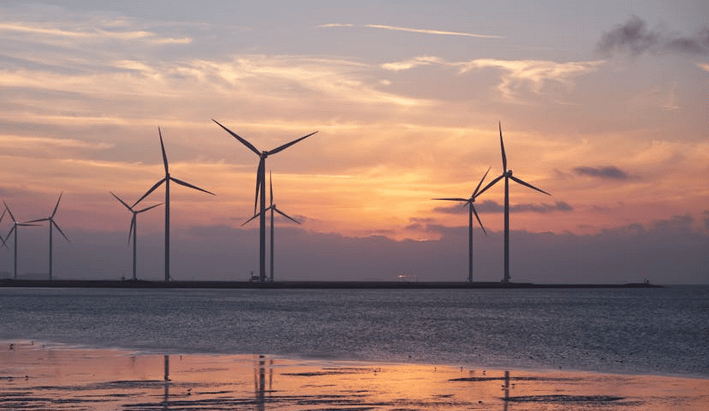
Because LDES systems can discharge for multiple days, they’re essential to helping bridge prolonged periods of low wind and solar output. That capability is increasingly critical in Europe, particularly in Northwestern markets with high wind penetration.
There, renewable business models are under strain: negative power prices, stalled offshore wind tenders, and grid reliability warnings suggest systems are nearing the limits of variable generation without added flexibility. LDES could act as a quasi-baseload resource, stabilizing revenues and enabling further renewables buildout.
|
|
|
 |
|
|
|
In the U.S., the One Big Beautiful Bill preserved technology-neutral storage tax credits, giving LDES a boost. But green hydrogen — “until recently widely considered the long-duration storage solution to complement lithium-ion’s short-term performance” — has lost momentum due to cost and efficiency challenges, leaving a gap that multi-day batteries may fill.
The next hurdle is scaling manufacturing. Ore and Noon must cross the “valley of death” between pilot success and commercial production, raising capital and building factories with far fewer resources than incumbents. If they succeed, the 100-hour battery could move from concept to cornerstone of high-renewables grids.
|
|
|
|
|
|
Thanks for diving into the Developer Dispatch with us.
|
|
|
|
|
|
|
|
|
|
Building American power requires a powerful team. |
|
|
|
|
|
|
|
|


