|
|
 |
|
|
|
Good morning and happy Friday,
It may not have been to everyone’s taste, but Bad Bunny’s Super Bowl halftime show was historic, revolutionary, and didn’t shy away from real-world issues—energy folks likely caught the nod to Puerto Rico’s frequent blackouts with a bit that featured linemen working on utility-pole transformers, a reference made even more poignant given that the DOE quietly axed $450 million in energy resilience funding for the island in January.
But the transformers weren’t the only things throwing sparks over the last week. Energy Secretary Wright “trashed solar and wind for not providing much power during Winter Storm Fern,” arguing that coal plants were essential to keeping the lights on, and in Congress, Republicans have “gone on the offensive” with similar messages—although performance data indicates that in fact, offshore wind showed up big.
One solution to rescue coal plants? Enlist the military and require it procure power from coal to run its facilities, although the grid could make or break this plan.
In other news, in a long-awaited move with more far-reaching implications, on Thursday the EPA repealed the Endangerment Finding, removing the legal underpinning for a range of climate-related regulations, and setting the stage for a courtroom clash.
Against this backdrop, a new poll from Politico indicates a slight majority “think Democrats, not Republicans, are the party most committed to reducing energy prices.”
Read on for more.
|
|
|
 |
|
|
PJM’s $178 Billion Question
A new study by Synapse Energy Economics highlights a huge opportunity for PJM: accelerating solar, wind, and battery deployment could slash system costs, improve reliability, and reduce outages. Doubling the pace of clean energy deployment—combined with demand response and transmission upgrades—offers a clear path to a more resilient, affordable grid. Here are some key findings:
-
Deploying 78 GW more solar and 54 GW more battery storage than the status quo scenario through 2035 could deliver a whopping $178 billion in cumulative system cost savings for PJM.
-
An advanced policy scenario—accelerated renewables and storage deployment alongside expanded demand response and transmission upgrades—reduces outage frequency by 97% and the number of customers affected by 87% by 2030, while also shortening outage durations.
-
Unsurprisingly, the study identified PJM’s interconnection queue as a major bottleneck, with 46 GW of projects approved but not yet online; streamlining permitting, siting, and queue management is critical.
-
Given the need for speed, the study points to solar + storage as key near-term solutions: these projects can be built faster than new gas turbines, avoiding the multi-year delays and supply chain challenges that plague fossil fuel capacity.
⚡️ The Takeaway
Watts up? For clean energy developers, PJM represents both a challenge and an enormous opportunity. Policy reforms and expedited interconnection processes could unlock billions in savings and dramatically enhance grid reliability. Developers who can navigate permitting hurdles and align with market reforms will be well-positioned to deliver solutions faster than traditional thermal generation, potentially reshaping the region’s energy landscape by 2035. One thing is clear: PJM is at a “fork in the road” that offers a historic moment to accelerate clean energy deployment while avoiding costly, long-term reliance on fossil fuels.
|
|
|
 |
|
|
The Sun’s Up in Virginia
After years of failed attempts, legislation aimed at curbing blanket local prohibitions on utility-scale solar is advancing in Virginia’s General Assembly. Last week, the Senate and House each passed their respective versions of the legislation, and the bills now head to the opposite chambers for consideration before potentially reaching Gov. Abigail Spanberger’s desk. While similar proposals have stalled in past sessions, Democratic trifecta control and mounting energy demand—particularly from data centers—have given this year’s effort new momentum. Here’s what the legislation would do:
-
Localities would be prohibited from enacting outright or de facto bans on utility-scale solar projects, while still preserving their authority to review and ultimately approve or deny proposals on a case-by-case basis.
-
Local governments that choose to reject a project would be required to document and report their reasons, creating greater transparency and accountability in how solar proposals are evaluated across the state.
-
Statewide siting standards—including setback requirements, stormwater management, and decommissioning obligations—would be established, with the goal of providing clearer guardrails for both developers and local officials.
⚡️ The Takeaway
What’s next? The chambers must resolve differences—including stricter Chesapeake Bay setback provisions in the House version—before mid-March adjournment. Gov. Spanberger could sign, amend, or veto the final bill. Even if enacted, implementation won’t begin until July 1, and local opposition may persist. For developers, the legislation could reopen constrained markets, but thoughtful community engagement and careful project design will remain essential to winning approvals under the new framework.
|
|
|
 |
|
|
|
|
|
|
 |
|
|
|
|
 |
|
|
Let There Be Light
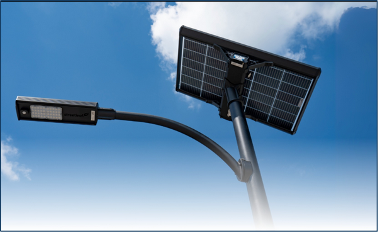
What if streetlights didn’t need the grid at all? That’s the premise behind Streetleaf, a Florida-based company installing off-grid, solar-powered streetlights in new housing developments across the Sun Belt (the systems can work further north but require upsized panels and batteries).
Instead of trenching wires, laying conduit, and coordinating with local utilities, housing developers can install standalone poles equipped with LED fixtures, monocrystalline solar panels, and lithium iron phosphate (LFP) batteries.
Streetleaf recently completed a 40-light installation in a new Austin, Texas neighborhood, bringing its total footprint to roughly 13,000 systems across 10 states. The company was born out of frustration: CEO Liam Ryan, working on a large housing development project, couldn’t find a supplier that could deliver thousands of cost-effective lights with long-term maintenance. So his team built their own solution.
|
|
|
 |
|
|
|
With features like five-day battery autonomy, motion-triggered brightening, and storm-responsive dimming, Streetleaf is now aiming to scale from 13,000 installations to 100,000—positioning itself as a street lighting utility that just happens to run on solar.
The pitch to housing developers is simple: skip the delays and costs of grid interconnection. By avoiding trenching and utility coordination, projects can move faster and potentially, more cheaply. Streetleaf offers both direct sales and service agreements, charging a monthly fee it says undercuts traditional utility rates. And as a bonus, the lights stay on during power outages. Once again, solar is stepping up as a disruptive technology.
|
|
|
|
|
|
Thanks for diving into the Developer Dispatch with us.
|
|
|
|
|
|
|
|
|
|
Building American power requires a powerful team. |
|
|
|
|
|
|
|
|


