|
|
 |
|
|
|
Good morning and Happy New Year,
Well, 2025 is in the rear-view mirror, and some might say “good riddance” to a year Heatmap’s Robinson Meyer dubbed the year of energy confusion (not to be confused with The Temptations’ most excellent 1970 hit Ball of Confusion).
If you hit pause on following clean energy news over the break, don’t worry, not much happened – aside from the administration halting construction on 7 GW of offshore wind projects on the grounds that they represent an “emerging national security risk,” a “reckless,” game-changing move that’s left the sector reeling. Many companies are pushing back against the stop work order, warning that it could strike a ‘fatal blow’ to projects.
The furore immediately spilled over to affect permitting reform, with Senate Democrats abruptly ending talks on this topic, prompting Senator Mike Lee to call for the elimination of the filibuster to get permitting legislation passed. In any case, the SPEED Act is “unlikely to clear Congress before late next year, if at all,” given the slate of other issues facing lawmakers.
Oh, and the U.S. took over Venezuela’s oil industry. The president has been encouraging the U.S. oil industry to return to the country, but getting no takers. Energy Secretary Chris Wright said America will sell Venezuelan oil “‘indefinitely’ after completing sales of the crude currently accumulating in storage there.” Meanwhile, Senate Democrats have launched an investigation into what oil companies knew in advance of Operation Absolute Resolve.
We have several look-back and look-ahead articles for you in the Hot & Windy News section below, but one thing we can count on in 2026 is that energy affordability, which took center stage in 2025, will continue to be a potent political issue in the lead-up to the midterms.
Read on for more.
|
|
|
 |
|
|
Building the AI Power Stack
Google closed out 2025 with a bang, announcing it would acquire clean energy developer Intersect Power for $4.75 billion. The deal represents a strategic shift in how Big Tech secures electricity for AI-driven data centers – rather than relying primarily on utilities and power purchase agreements, Google is vertically integrating clean energy development to overcome grid bottlenecks and accelerate data center deployment. Here’s a closer look:
-
Google’s relationship with Intersect began before the acquisition through a strategic partnership announced in late 2024, when Google and TPG Rise Climate co-led an $800 million investment. That deal gave Google a minority stake and launched joint development of co-located data center and clean energy projects, targeting up to $20 billion in infrastructure investment by 2030. The acquisition is a natural extension of that collaboration.
-
Intersect is a vertically integrated clean energy developer that originates, finances, builds, and operates large-scale projects tailored to industrial and data center demand. Its current portfolio includes roughly 2.2 GW of solar and 2.4 GWh of battery storage, with plans to reach over 10.8 GW by 2028. Long-term supply agreements with First Solar and Tesla underpin its rapid scaling strategy.
-
Google’s parent Alphabet expects to spend $91-93 billion on AI infrastructure in 2026, and Intersect will play a central role by delivering power capacity in parallel with new data centers, including the Haskell County, Texas energy park coming online in 2026.
⚡️ The Takeaway
Bypassing bottlenecks. The acquisition positions Google at the forefront of a new “bring-your-own-generation” model, reshaping how power is delivered for AI infrastructure while redefining the intersection of clean energy and hyperscale computing. Access to power has emerged as the biggest constraint to AI growth, and utilities face long interconnection queues and transmission constraints, slowing data center timelines. By acquiring Intersect, Google gains the ability to build “behind-the-meter” energy parks that bypass bottlenecks and pair solar, batteries, and flexible generation directly with data centers, allowing faster deployment, greater reliability, and more predictable energy costs. |
|
|
 |
|
|
AI Stress Test in Illinois
Illinois is emerging as a key battleground in the race to power AI-driven data centers, which demand enormous amounts of reliable, around-the-clock electricity. Two parallel policy pushes – massive battery storage expansion and renewed interest in nuclear power – highlight both the opportunities and tensions involved in meeting this surge in demand while protecting consumers and communities. Here’s what’s happening:
-
Data centers needed to train and run AI models consume vast amounts of electricity, threatening to overwhelm Illinois’ existing power supply and drive up costs for residents. State studies project energy shortfalls by 2029, increasing the risk of higher rates, blackouts, and greater reliance on imported power.
-
Illinois’ new Clean and Reliable Grid Affordability (CRGA) Act aims to add 3 GW of battery storage by 2030 – more than 37 times current capacity. Batteries help smooth renewable energy intermittency, replace polluting peaker plants, and lower peak demand. Programs like “Storage for All” and virtual power plants allow households and businesses to contribute distributed energy back to the grid, easing stress from data centers while stabilizing prices.
-
With nuclear already supplying about half of Illinois’ electricity, state leaders view it as essential for powering AI reliably. Proposed legislation would streamline permitting for new small modular reactors, offering highly predictable, always-on power. However, concerns persist around nuclear waste disposal, safety perceptions, and local opposition.
-
At the same time, local pushback against data center projects reflects fears of higher electricity bills, water usage, and unequal bargaining power between tech firms and smaller communities.
⚡️ The Takeaway
A hybrid solution. Illinois’ push to become a hub for AI data centers is colliding with a sobering reality: the state is already running short on power. State analysts warn that surging data center demand, combined with retiring coal plants and slow deployment of renewables, is driving higher electricity bills and threatening reliability, with further price increases expected. This makes Illinois’ strategy clear but urgent. Battery storage can provide near-term relief by shaving peak demand and integrating renewables faster, while nuclear power offers the most reliable long-term backbone for AI-scale electricity needs.
|
|
|
 |
|
|
-
A Banner Year: Energy industry dealmaking soared in 2025 on large utility, IPP mergers
-
Ups and Downs: The 2025 energy transition in eight charts: clean wins, dirty setbacks
-
Jealousy List: The 13 clean energy stories we wish we wrote in 2025
-
Roller Coaster Year: 2025 brought stiff headwinds for clean energy. So why are advocates optimistic in 2026?
-
2025 Offshore Wind Quiz: Turmoil, supersized turbines and 'motherf*cking wind farms'
-
Ouch: More than $32 billion in U.S. clean energy projects were canceled in 2025
-
What to Expect in 2026: Looking ahead to a deepening affordability crisis, an election and the threat of an AI investment bubble
-
Tech Stack: What’s next for battery technology in 2026
-
Coming Up: 10 big energy stories Canary Media is tracking in 2026
-
Supply Chain: Transformers in 2026: Shortage, scramble, or self-inflicted crisis?
-
Potent Issue: The data center rebellion is here, and it’s reshaping the political landscape
-
Brassy Avatar: Trump, atoms, AI and the Texas data center gusher
-
Seismic Shift: AI energy demand by the numbers — and how it might affect the planet
-
Making Lemonade: California water district plans up to 21 GW of solar on land fallowed due to water shortages
-
Things Fall Apart: How US offshore wind’s promise was dismantled — and what America lost
-
Court Date Set: Judge to review classified information Trump administration used to halt Dominion wind project
-
Cross-Tie Approved: BLM OKs power line through desert between Utah and Nevada
-
Doin’ It Right: ERCOT outperformed on interconnection in 2024 likely due to “connect and manage”
-
Nuclear Renaissance? Optimism about nuclear energy is rising again. Will it last?
-
Contentious: Takeaways from the House’s big nuclear hearing
-
Task Force: Iowa governor: Nuclear energy is 'vital' to Iowa's energy future
-
Guarding the Grid: The Texas power grid will get a boost from batteries this winter
-
Keep On Keepin’ On: DOE orders Indiana coal units totaling more than 950 MW to run past retirement dates
-
Public Interest: Ohio Supreme Court will decide future of solar projects across the state
-
Land of Enchantment: New Mexico's grid hits 59% renewables without raising electricity prices
-
Honey, I Shrunk the Queue: Large load tariffs could streamline interconnection by shrinking queues: Enverus
-
Cool Tool: Advocacy group releases new high-capacity transmission permitting tracker tool
-
Road Map: 'Siting Policy Field Guide' offers state lawmakers solutions to renewable energy deployment bottlenecks
-
Big Bucks: Even without hurricanes, U.S. disaster costs surpassed $100 billion last year
- Escalation: Trump quits pivotal 1992 UN climate treaty, in massive hit to global warming effort
|
|
|
 |
|
|
|
|
 |
|
|
Bee-lieve the Hype
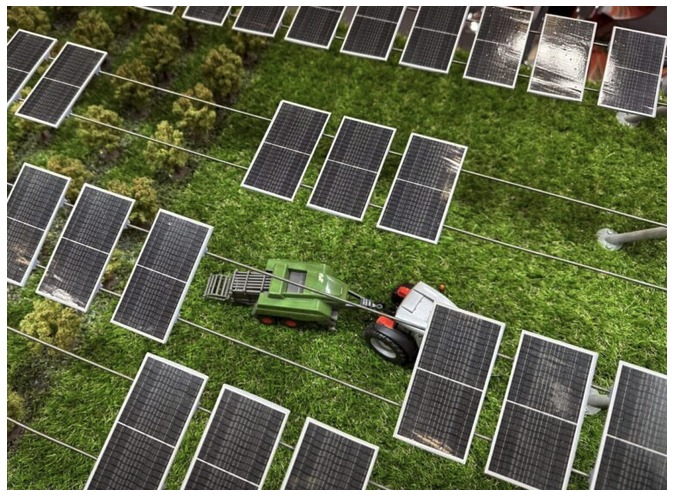
Agrivoltaics offer a wide range of benefits, which many solar developers emphasize in their marketing campaigns as a way to increase public support and buy-in for large projects sited in agricultural areas.
A secondary but related marketing benefit accrues to producers of agricultural products sourced from agrivoltaic projects, such lamb and mutton grazed on land hosting solar panels, or honey made from bees that feed on pollinator-friendly crops planted among rows of panels.
While promoting a product’s connection to clean energy makes for great advertising, in the absence of quantifiable benefits, it amounts to little more than feel-good storytelling. Enter CleanCounts, a nonprofit that can help tie products to verifiable environmental attributes.
In the same way that renewable energy credits (RECs) represent a monetizable set of positive externalities associated with a megawatt-hour of clean energy production, CleanCounts’ M-RETS platform can track environmental attributes on an hourly, generator-specific basis across North America, enabling more granular and credible claims about societal benefits like pollinator support or community impact.
|
|
|
 |
|
|
|
This opens the door to expanded energy attribute certificates (EACs) that reflect where and how solar is deployed – on farms, tribal lands, or underserved communities – while avoiding vague or politicized claims, thus providing a standardized framework to define and verify these attributes scientifically.
In turn, agricultural producers and solar developers alike can use EACs to quantify the specific, positive environmental and social benefits of a particular project. Sounds like a sweet deal for solar.
|
|
|
|
|
|
Thanks for diving into the Developer Dispatch with us.
|
|
|
|
|
|
|
|
|
|
Building American power requires a powerful team. |
|
|
|
|
|
|
|
|


