|
|
 |
|
|
|
Good morning and happy Friday,
Last Friday, the U.S. International Trade Commission voted to allow a petition seeking new antidumping and countervailing duties (AD/CVD) on crystalline silicon solar cells imported from Cambodia, Malaysia, Thailand and Vietnam to move forward. Many in the solar industry oppose the petition; in the near-term, developers may be scrambling to use, by year’s end, the panels they were able to import during the 24-month tariff exemption that’s about to expire.
And, it was a busy week at 888 First Street, as FERC gave a thumbs up to the contentious 303-mile Mountain Valley Pipeline, which will move natural gas from northwestern West Virginia to southern Virginia. The Commission is also gearing up to welcome three new members. One issue they may have a chance to weigh in on is SPP’s request to be the first U.S. grid operator to bridge the western and eastern interconnections.
Meanwhile, the IEA says global spending on clean energy is “on track to hit $2 trillion in 2024,” double the $1 trillion spent on fossil fuels.
Read on for more.
|
|
|
 |
|
|
Sabin All My Lovin’
Since 2021, Columbia University’s Sabin Center for Climate Change has published a series of reports titled Opposition to Renewable Energy in the United States. The June 2024 edition is hot off the presses, and – spoiler alert – the sledding’s gotten a bit tougher. Here are some key findings:
-
Researchers found 19 anti-renewable state-level restrictions, and nearly 400 local restrictions they classified as “so severe they could have the effect of blocking a project.” To wit, almost 380 projects have “encountered significant opposition” across virtually every U.S. state.
-
At the state level, 2 of the 19 restrictions identified were passed in 2024, as were 55 of the local restrictions, and among the 380 highly contested projects, 82 are new conflicts as of this year.
-
States with heightened opposition activity include Michigan, Ohio, Virginia, and Wisconsin. Many of the restrictions seek to limit or block the installation of solar projects on agricultural land. In Wisconsin, "at least 9 townships” have adopted ordinances that require property line setbacks for turbines to be the greater of 1 mile or 10 times turbine height.
⚡️ The Takeaway
A sobering state of affairs. The report shows pushback against renewables isn’t limited to onshore wind and solar, noting that "there has been significant litigation against offshore wind projects" and "Local governments have increasingly taken action to oppose the siting of power lines and battery storage facilities that will be necessary to transmit and store electricity generated by renewable energy facilities.” |
|
|
 |
|
|
Give All the Power to the Many
Launched in 2006, The Hamilton Project is an economic policy initiative within the Brookings Institution. Last month it hosted a forum on building clean energy infrastructure, and also released a short paper highlighting eight facts about permitting and the clean energy transition. Here are a few takeaways:
-
The authors find that thanks in part to policy actions at the national level, “over the past 15 years, federal permitting durations have decreased, (and) nearly all wind and solar projects are exempt from the three most relevant federal permits.” As such, “intense focus on federal permitting reform will not speed up most clean energy infrastructure projects.”
-
Indeed, a 2023 survey of wind and solar developers conducted by LBNL found that local ordinances or zoning, and community opposition, were the number one and number three leading causes of project cancellation between 2016-2023 (grid interconnection was number two).
-
The last of the eight facts presented is one we’ve covered before, but bears repeating: The amount of operational generation and energy storage are dwarfed by the capacity languishing in interconnection queues across the country. The situation is most dire in California, where the ratio of queued to online capacity is now 7:1; in the non-CAISO West, it’s 3.3:1.
⚡️ The Takeaway
Waiting in the wings. Dispatch readers won’t be surprised to hear interconnection takes longer now than 20 years ago. “In the 2000s, 75% of interconnection requests resulted in commercial operation in under three years; in 2023, fewer than 25% of requests resulted in operation in under four years, and roughly 25% took at least six years.” No surprise, then, that “more than 1,000 projects are withdrawn from the interconnection queue each year.” |
|
|
 |
|
|
|
|
|
|
 |
|
|
|
|
 |
|
|
This Turbine Builds Itself
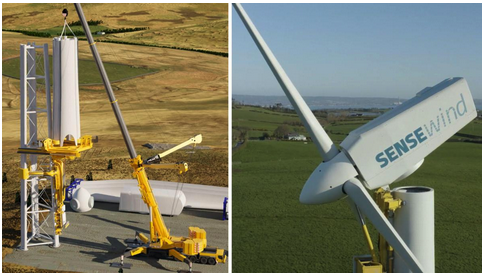
Wind turbines are big, and they keep getting bigger. This makes installing and maintaining them an ever-more-challenging proposition, one that requires expensive specialized equipment, such as supersized cranes. In addition to increasing costs, the turbines’ size also increases risks for construction and maintenance crews.
UK-based SENSEWind thinks it has a solution: they’ve created a turbine that can build itself. The structure has an integrated rail system that runs alongside the turbine tower and can be remotely operated. The system can be used not only to erect the turbine, but also to bring the nacelle down to the ground for maintenance.
The system will also incorporate cost saving features, such as using standard steel pipes like those used in the oil and gas industry, and “doing away with flange connections” to reduce the high costs of inspection and maintenance of bolted joints on the tower. |
 |
|
|
|
SENSEWind has already demonstrated the technology with a 2 MW turbine; next it will do so with a 6 MW turbine, and the company says it plans to deliver a commercial SENSE turbine installation system onshore in 2027 at the Tormywheel Wind Farm in Central Scotland, and a fixed bottom system offshore by 2030.
It calls to mind Erector Sets, toy construction sets first introduced in the early 1900s (their quaint 1922 slogan: Boys Today, Men Tomorrow!) The times have changed, and so too have wind turbines. Want to see the process in action? Check out this video! |
|
|
 |
|
|
|
Contact us to learn more about working with Bantam. |
|
|
| Contact Us |
|
|
|
|
|
|
|
|
 |
|
|
|
|
|
|
Copyright © 2024 Bantam Communications, All rights reserved.
|
|
|
|
|

