|
|
 |
|
|
|
Good morning and happy Friday,
On Tuesday, President Trump gave his State of the Union speech, taking a victory lap on energy and unveiling a new “ratepayer protection pledge” program, framing it as an “obligation” for major tech companies to supply power for the energy-intensive data centers driving the AI boom. The White House will host leading data center and artificial intelligence companies next week to discuss the issue, although a reality check may be called for.
Meanwhile, the northeastern U.S. was slammed by a historic bomb cyclone blizzard that dumped more than two feet of snow in many places, with the possibility of more snow on the way at the end of the week.
And, while the Supreme Court’s decision to strike down most of Trump’s reciprocal tariffs could ease materials costs for energy-related projects, ongoing tariffs on key materials, along with potential new tariff strategies, means uncertainty for energy infrastructure projects may continue – although clean energy manufacturers are expected to muddle through the turmoil.
Read on for more.
|
|
|
 |
|
|
Counties Crack Down
A new analysis by USA TODAY finds that local governments across the U.S. are increasingly adopting rules that make it harder to build new wind and solar projects. Examining county-level regulations nationwide, the study concludes that by the end of 2025, nearly a quarter of U.S. counties had adopted measures making it difficult or impossible to build new utility-scale renewable energy projects. The report documents a sharp rise in these impediments since 2021 and details the zoning tactics, moratoriums and regulatory standards used to slow or block development. Here’s a summary of the findings:
-
Widespread and growing restrictions: By the end of 2025, 755 counties — about 24% nationwide — had some form of impediment to new utility-scale (over 5 megawatts) wind or solar projects, up from roughly 15% in 2023. USA TODAY categorized these as outright bans, moratoriums, significant impediments (such as strict technical limits), and other burdensome permitting conditions.
-
Outright bans and strategic moratoriums: Some counties have formally banned commercial wind or solar projects amid local backlash. Others imposed moratoriums while rewriting zoning codes; although sometimes neutral, these pauses can function as de facto bans if new rules are crafted to be highly restrictive.
-
Technical rules that act as barriers: Height caps of 500 feet or less for turbines, large setback requirements tied to turbine height, and noise limits below 50 decibels can make projects financially or physically unworkable. While not labeled bans, experts say such standards often eliminate viable building sites.
-
Agricultural land limits on solar: In at least nine states, counties restrict how much farmland can host solar arrays, arguing prime agricultural land should be preserved. Given that flat, sunny farmland is ideal for solar, these caps significantly constrain development.
⚡️ The Takeaway
Renewables at risk. The analysis is based on extensive, expert-vetted research that began with data from NREL and the Sabin Center for Climate Change Law, then expanded through three years of tracking local ordinances, reviewing government filings and media reports, and interviewing more than 45 experts. Those on the front lines have known that opposition has been getting worse but the scale of these bans is alarming. Overall, the study paints a picture of the growing tension between demand for more and cleaner electricity and mounting local pushback against wind and solar projects, underscoring the need for intentional, early community engagement and clearer articulation of local benefits to build durable support for projects on the ground.
|
|
|
 |
|
|
Record Growth, Rising Risk
New research shows the U.S. energy storage market is breaking records even as developers face mounting policy and supply chain uncertainty. Two recent studies from industry groups point to sustained, high-volume deployment in 2025, while a separate January outlook highlights structural shifts that could reshape the sector in 2026 and beyond. Key points include:
-
The Q1 2026 Energy Storage Market Outlook (ESMO) from SEIA and Benchmark Mineral Intelligence reports a record 57.6 GWh installed in 2025, up 30% year over year and four times the level of three years ago.
-
Utility-scale projects accounted for nearly 50 GWh, while residential storage rose 51% to 3.1 GWh. Two-thirds of new utility-scale capacity was built in states won by President Trump, and more than 600 GWh is projected by 2030.
-
Consistent with these findings, a different study from the Business Council for Sustainable Energy and BloombergNEF finds that more than 13 GW of energy storage was installed across the U.S. last year.
-
The ESMO study also notes rapid domestic manufacturing growth, with over 21 GWh of lithium-ion cell production for stationary storage and nearly 70 GWh of U.S. system manufacturing capacity. However, new federal policies, including “Foreign Entity of Concern” rules, could complicate supply chains in 2026 even as installations are forecast to reach 70 GWh.
⚡️ The Takeaway
A strong but increasingly complex market. For clean energy developers, surging demand for storage—driven by grid reliability needs and AI-powered data centers—creates major growth opportunities. But they must also navigate tighter trade rules, supply chain restructuring, and new technical requirements such as grid-forming standards. As storage becomes central to the power system, success will depend on securing resilient supply chains, adapting to evolving regulations, and strategically managing policy and market risk.
|
|
|
 |
|
|
|
|
|
|
 |
|
|
|
|
 |
|
|
A New Iron Age
Google has struck a landmark clean energy deal in Minnesota that could reshape how data centers power the AI boom — and how emerging storage technologies reach commercial scale.
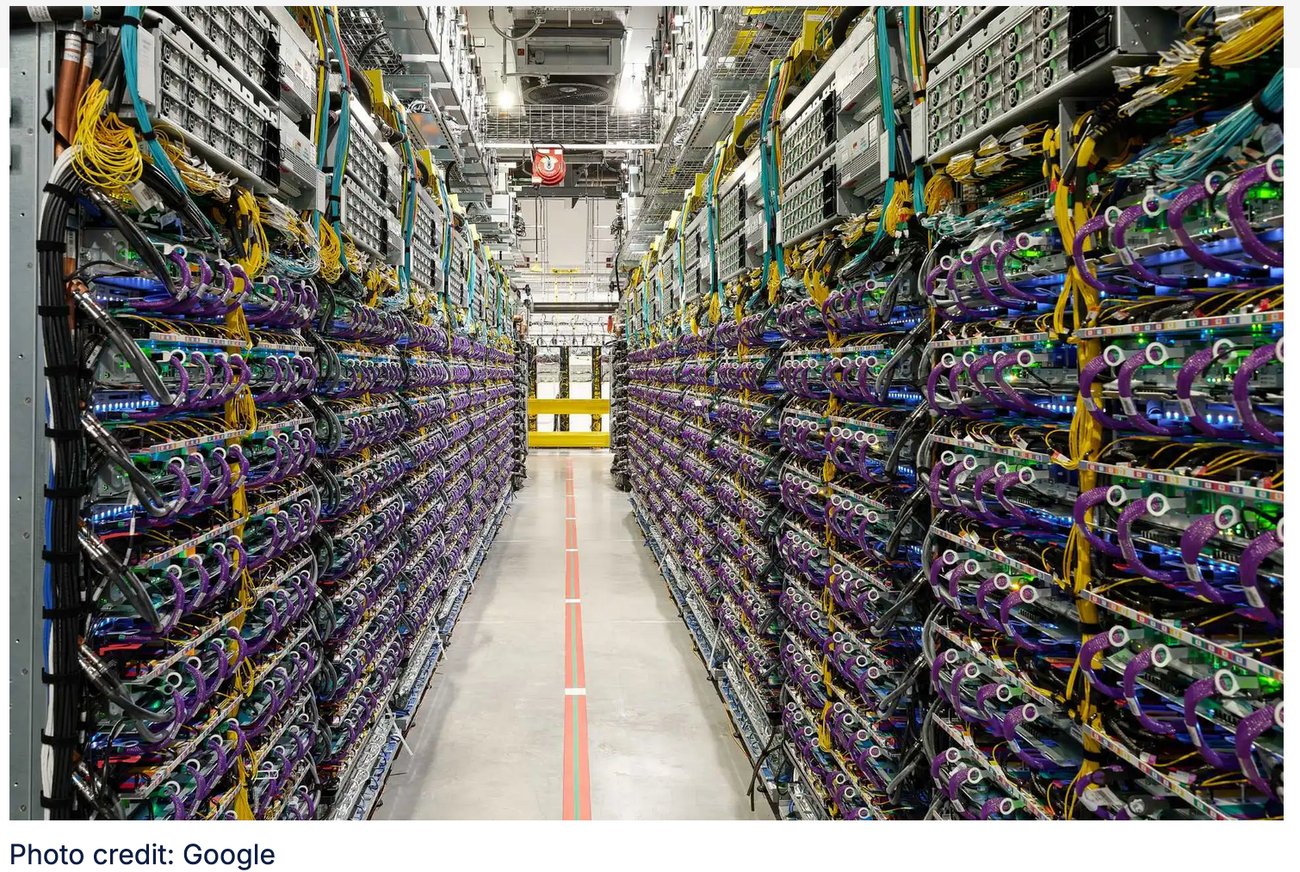
Through an agreement with Xcel Energy, Google will support 1.9 GW of new generation, including 1.4 GW of wind, 200 MW of solar, and a massive 300 MW / 30 GWh long-duration battery project from Form Energy — the largest battery by energy capacity ever announced.
Form’s iron-air batteries store electricity by rusting and un-rusting iron, enabling discharge for up to 100 hours — far longer than conventional lithium-ion systems and capable of delivering multi-day, firm clean power. At 30 GWh, the project alone equals more than half of all U.S. storage capacity added in 2025.
What makes the deal especially novel is Google’s evolving “clean transition tariff,” renamed in Minnesota as the Clean Energy Accelerator Charge. The structure allows large power users to fund emerging technologies and grid upgrades directly, ensuring local ratepayers are not saddled with the costs. Google will also contribute $50 million to a distributed battery program designed to strengthen grid reliability.
|
|
|
 |
|
|
|
The transaction is significant for several reasons: it vaults long-duration storage into true utility scale before its first commercial project is even complete; it demonstrates that hyperscalers can finance clean, firm power without raising electricity rates; and it provides a rare commercial pathway for technologies often stuck in pilot purgatory. Form will manufacture the batteries in West Virginia, accelerating domestic clean energy manufacturing.
For the U.S. clean energy industry, the message is clear: deep-pocketed data center buyers may become the catalyst that scales next-generation storage, aligns clean power with 24/7 load, and unlocks a more reliable, carbon-free grid — if regulators approve and execution matches ambition.
|
|
|
|
|
|
Thanks for diving into the Developer Dispatch with us.
|
|
|
|
|
|
|
|
|
|
Building American power requires a powerful team. |
|
|
|
|
|
|
|
|


